

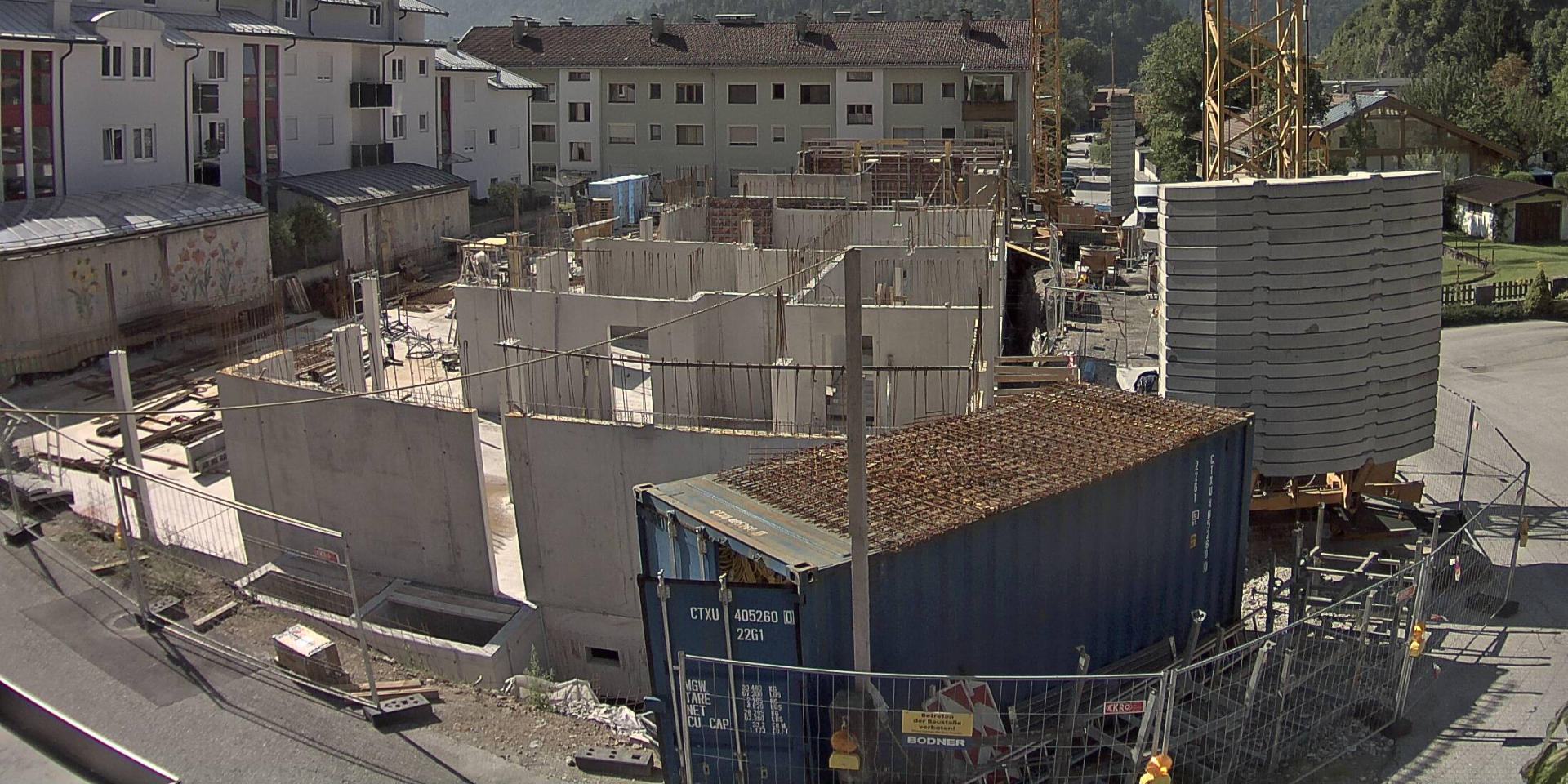
The focus of Mitterndorferstrasse GmbH is on recognising and implementing the development opportunities of projects. We buy land and develop it to a high degree of utilisation. The field of activity includes planning, the official process, the examination of the economic and fiscal background and is responsible for the construction management. From the construction of sustainable residential complexes and subsidised housing to industrial and commercial construction. From new construction to renovation of old buildings.
Controlling and therefore Cash flow planning play a special role in these activities. As the interface between the customer and the banks, we ensure that construction projects are implemented within the agreed project costing. An essential part of this is recognizing deviations from the original plan and informing all parties involved in good time. This active communication is particularly important for construction projects, as a deviation from the plan can, in the worst case, lead to an overdraft of the construction account framework provided and thus to the inability of the project to pay due invoices. The consequences in this case can range from loss of the cash discount to construction being halted.
The old way
We create and coordinate all calculations with the help of Excel. The calculation always includes a rough Cash flow plan, i.e. the allocation of all items in the calculation to the time axis in order to determine the maximum amount of the necessary building loan.
Download link to the calculation below
In the past we had staff with different knowledge and skills with Excel. One of them, Robert, developed an ingenious "liquid planning Excel" for us. From the bank, all bookings were exported via csv, imported into the file and tagged there. These tags correspond to the positions in the calculation. This makes an allocation to the time axis possible.
Honestly. When I heard SVERWEIS, I got out.
We are a small Tyrolean company, our problem is that we could not keep this know-how in the company and the successors could not operate the file properly. In addition, small formula errors appeared over time. Since the file is the basis for regular reporting to the bank, this is of course problematic.
The use of Commitly
We are one of Commitly's first customers and have also been able to test functions that have not yet been released. Commitly has significantly simplifiedCash flow planning and controlling. At the start of a project, we still create the calculation in Excel. However, we now connect to the construction account immediately after the loan has been granted. This is the only way we have already experienced the first savings.
Whereas in the past we needed the client to sign for their account with read-only access to get access to the account transactions, now the client can simply add us as an administrator in Commitly - within 2 minutes! In the past, it usually took us 7-10 days to collect all the signatures and send the documentation to the bank. And for our own projects, we can also add our clerks. Since Commitly has read-only access to the accounts, there are no security issues as a result.
The connection with the bank eliminates the tedious, complicated and error-prone importing/exporting of bookings. All transactions are synchronised with just one click and are therefore always up-to-date. But we also have a problem here. Not all banks provide "clean" data that can be processed correctly. The Volksbank, for example, supplies all transaction data (recipient, sender, IBAN, reason for payment) in one field. This means that the transactions cannot be processed automatically in this case; the allocation to categories has to be done manually. Interestingly, however, manual processing does not bother us here, as we can use it to check all bookings again.
The categories provided by Commitly by default are not 100% applicable for our area. Therefore, we have adapted the categories to the project calculation. For us, this also has the advantage of achieving a clear allocation and traceability compared to the original calculation. And for the bank, the reporting from Commitly is easy to read and check.
What has surprised us very much and which has become part of our daily routine is the search for bookings in Commitly. Questions like "has this invoice already been paid?" or "how many invoices have we already paid to X" come up again and again. In the past, this has always been a simple query in online banking.
With the faster login in Commitly and the easy search function in the transactions, access from the bank account is no longer efficient for us. Moreover, we can now delegate the task to a clerk. I am already curious about the advantages that Commitly's global search function will bring later on.
To map the planning, we created a plan and entered the rough Cash flow planning from the first Excel into Commitly. This took about 30 minutes. A good part of the time was spent questioning the assumptions again. Commitly makes it easy to create, name and commit plans. This is particularly important as there is a plan agreed with the bank.
Committing to a plan opens up perhaps the most important function for us: the forecast. Simply put, the forecast consists of the actual figures up to the current point in time plus the committed plan for the future periods. This allows us to see what would happen if everything went according to plan from now on. Sounds simple, but it's super important because this view includes the deviation we currently have and we can see immediately, for example, whether we will have a problem with the account framework.
In addition, the forecast enables the controlling function. At the end of the month, the actual figures are compared to the plan. Commitly shows the deviations by means of notifications. In recent months, this function has become the basis for our monthly discussions. We go through the individual items and analyse the variance. Commitly gives us different ways to handle the variance. We can confirm it and thus state that we are above or below plan and that this will also have an impact on the overall result. Or we can carry the deviation forward to the next months. This function in particular is super important for us, as there are often delays in the construction sector and deviations result from this.
Our concern at the beginning was that we would lose the flexibility of Excel through Commitly's plan methodology. Especially with new issues that require a change in the plan. Commitly has developed an interesting procedure for this. You can create a new plan based on a forecast. That goes in a jiffy. In this way, the decisions made in controlling are transferred to a new plan, which can then be reconciled with the bank. The advantage of this procedure is that we are virtually "audit-proof". All changes are traceable. Discussions based on different plan statuses are now a thing of the past.
What we have gained most in terms of external presentation is the reporting function. Our old Excel reports were ok for us, but we are not designers, we are builders. With the reports created by Commitly, we can now also show the professionalism with which we handle our projects in reporting to clients and banks.
Property Developer Calculation Template
The developer is kind enough to make the Excel file for a developer's calculation available to all interested parties. By registering for our newsletter you will receive the download link.