Cash flow planning
for your bank
for your bank
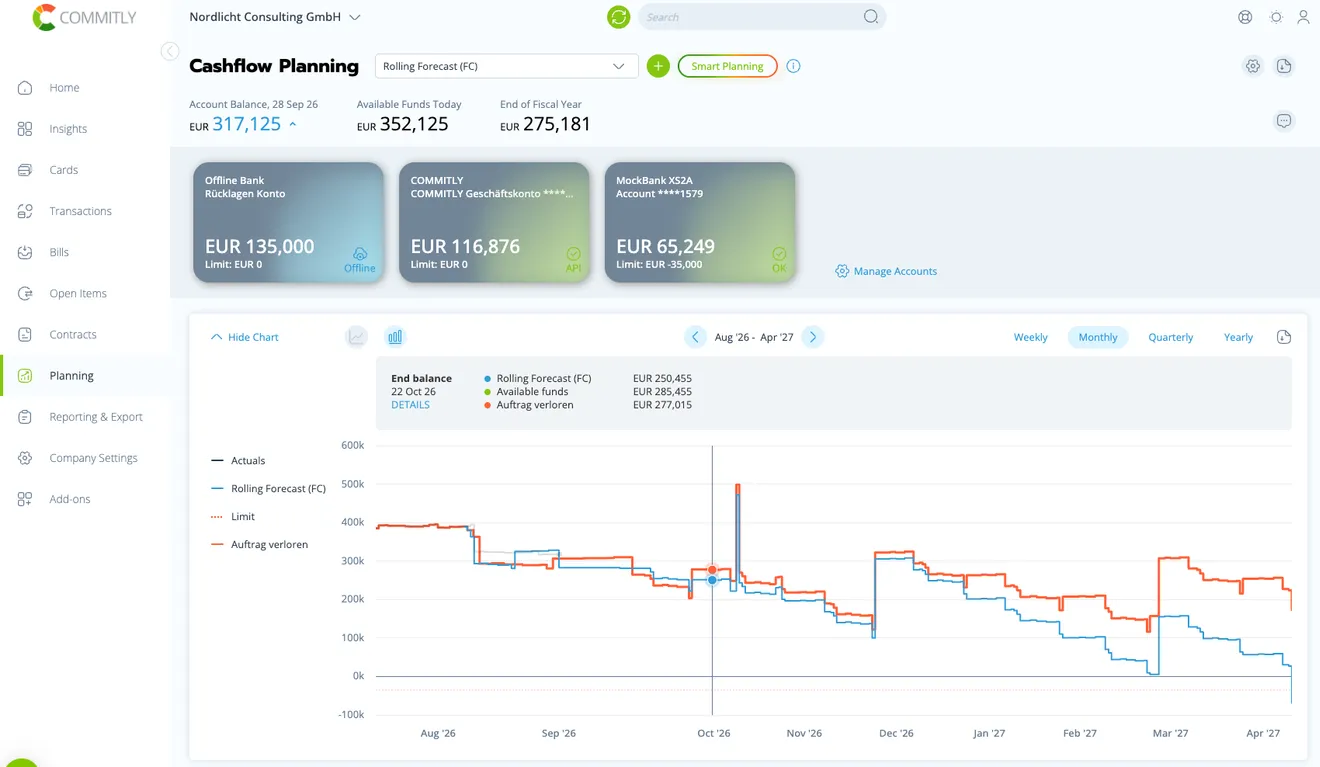

Four occasions, one plan
The bank wants to know whether your company can meet its obligations over the coming months as well. It does not ask just once.
Loan application
The bank checks whether you can carry interest and repayments — today and in the months ahead.
Credit line renewal
Before renewing, it wants to see how your liquidity has developed since the last approval.
Ongoing reporting
Many loan agreements require regular reports, often monthly or quarterly, sometimes with agreed covenants.
Subsidised loan
For subsidised loans through your house bank, a cash flow plan is often part of the application documents.
Which reports banks want to see
With these reports your bank sees where you stand, what you expect and how reliable your planning is.
You create all of them in COMMITLY as formatted PDFs or as an Excel export — from your real account data, not from a spreadsheet built the night before.
Try it free now!Forecast over 12 months
Your current expectation based on the latest data, set cautiously. Rolling: it becomes more current with every account movement.
Fixed plan
The plan the bank saw when granting the loan — frozen as a reference. In COMMITLY you commit it, after which it no longer changes by accident.
Variance analysis
Where does actual development depart from the fixed plan, in amount and in timing? This is the core of ongoing reporting.
Actuals over 12 months
What actually flowed, by category, for a selected financial year.
Short-term outlook over 13 weeks
When things get tight, the bank wants to know what the next weeks look like. The rolling 13-week view is the usual framework.
Scenarios for you
Best, base, worst: for your decisions. The bank gets the cautious plan.
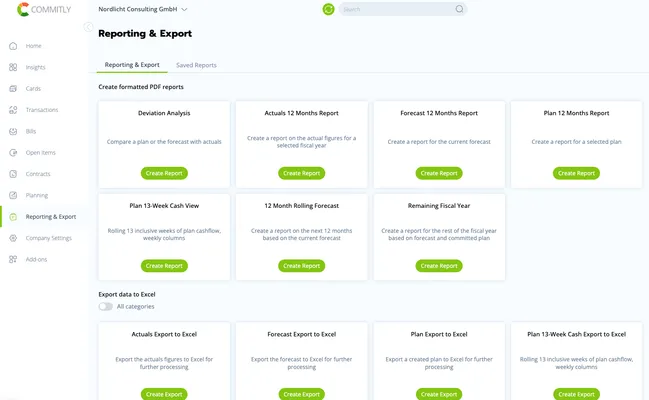
Reports at the push of a button, as PDF or Excel
- Variance analysis: plan or forecast against actuals
- 12-month reports for actuals, plan and forecast
- Rolling forecast over the next 12 months
- Rest of the financial year from forecast and fixed plan
- Export to Excel for your own analysis
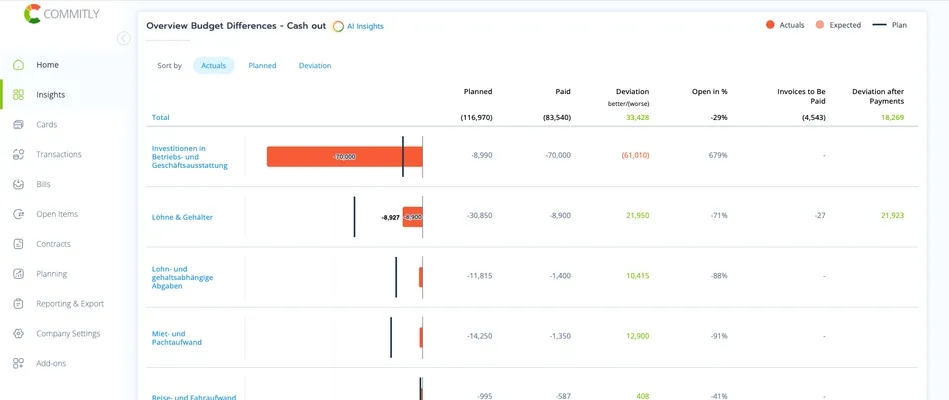
Explain variances before the bank asks
- Variances by category, with drill-down to the single transaction
- Amount and timing: late or early payments
- Automatically from the bank data, without manual matching
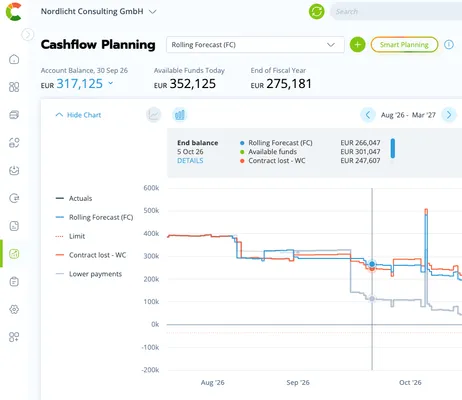
Scenarios for you, the cautious plan for the bank
- Dynamic scenarios alongside the rolling forecast
- Credit line visible as a limit in the chart
- Play through new hires, investments or delayed receipts without overwriting the plan
Like a prudent merchant
Banks judge not only the figures but how they came about. A cautious plan is more credible than an optimistic one.
Set income cautiously
Especially where receipts are uncertain. What is not sure to come belongs in a scenario, not in the plan.
Plan expenses earlier
Better a week too early than too late. Surprises on the cost side cost trust.
Allow for delays
Customers do not always pay on time. Plan realistic payment terms and you will have less to explain later.


Forecast, fixed plan and variance analysis from your real account data.
Try it for free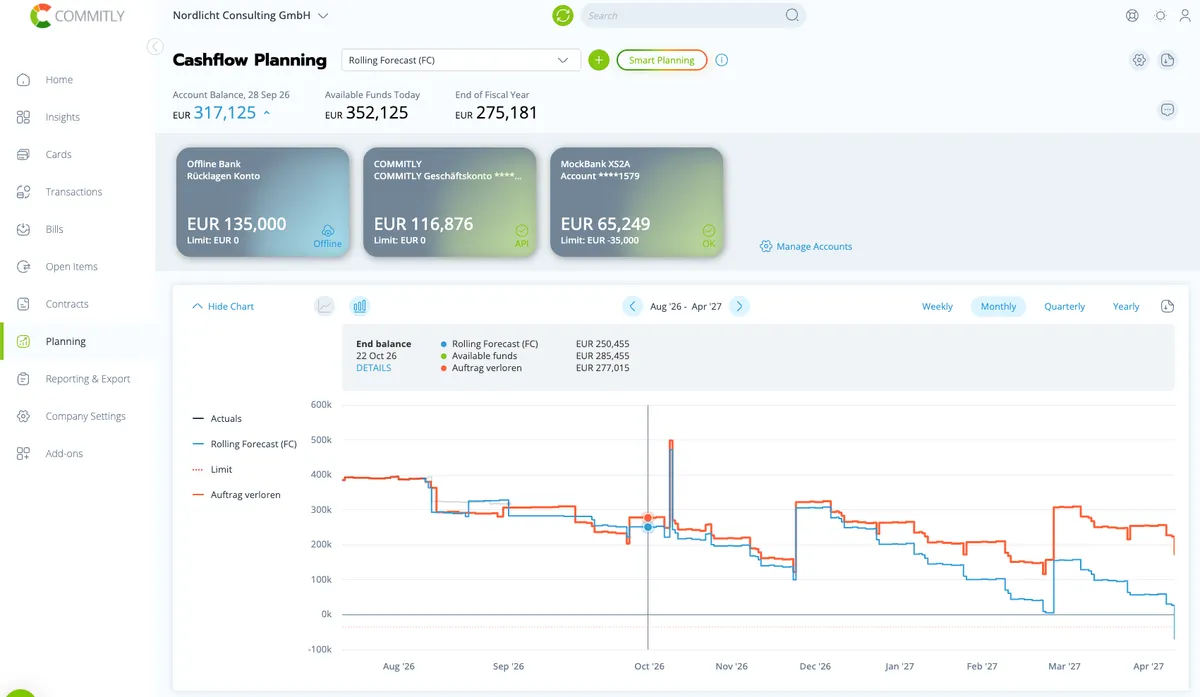
Frequently asked questions
The bank wants to see three things: a forecast for the next twelve months, a fixed plan as the reference, and a variance analysis showing where actual development departs from the plan. Add the actuals for the current financial year and, when things get tight, a short-term outlook over 13 weeks. What matters is not only the content but where the figures come from: a plan built from real account data is more credible than a spreadsheet put together for the meeting.