- Liquidität
Calculating cash flow in real estate: 5 core areas for lasting success
Calculating cash flow in real estate: 5 core areas for lasting success
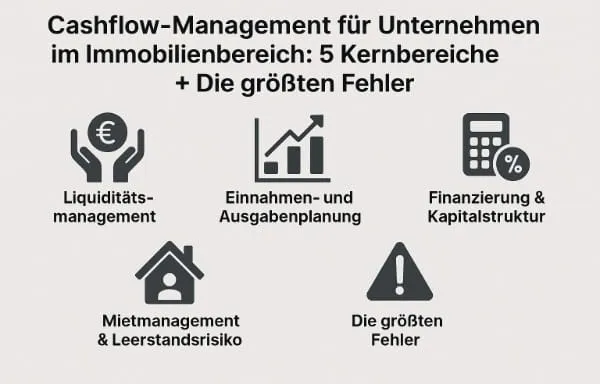
A precise cash flow calculation is decisive for the lasting success of companies in the real estate sector. It is not only about balancing income and expenditure, but also about strategic financing planning and risk minimisation. In this article we look at five central factors that are decisive in cash flow management for real estate. Using concrete examples such as case studies, we show how to calculate the cash flow of real estate and what options there are for optimising it.
The biggest mistakes when calculating cash flow in real estate
Before we turn to the five core areas, let us look at common mistakes that companies in the real estate industry should avoid:
- No liquidity and cash flow planning: many companies rely on experience instead of sound calculations – a risky approach, as prominent insolvencies (the Signa insolvency, for example) show.
- Underestimating liquidity bottlenecks: some businesses include uninterrupted rental income in the cash flow calculation for their properties without allowing for payment defaults or unexpected costs.
- No reserves for maintenance and modernisation: anyone who does not invest in the property in good time risks losses in value and rising repair costs.
- An overly optimistic financing strategy: rising interest rates or market changes can turn a high debt ratio in real estate investments into a debt trap.
- Neglecting tax optimisation: anyone who does not make use of tax depreciation pays unnecessarily high taxes and reduces their return.
- Inefficient rental management: high turnover, inadequate tenant credit checks or a lack of vacancy management lead to irregular income.
Now let us turn to the five core areas of cash flow management and how they can be optimised.
1. Liquidity management: keeping short-term cash flows under control
Good liquidity management means always having sufficient funds available to cover ongoing operating expenses, loans and unexpected costs. Calculating the cash flow of the properties realistically is fundamental for this. In the real estate industry, rental income is often delayed while ongoing costs such as loan interest, repairs or administration expenses arise regularly.
Case study: A property developer with several residential complexes had high rental income, but late payments by tenants and unexpected repairs led to liquidity bottlenecks. Only through optimised receivables management and by building up a liquidity reserve was he able to smooth out these fluctuations.
Possible mistakes:
- No financial cushion for unforeseen expenses
- No structured dunning process for tenants in arrears
- Insufficient control over short-term cash flows
Optimisation measures:
- Efficient receivables management: automated payment reminders and a consistent dunning process reduce rent arrears.
- Build up a liquidity buffer: secure at least 3–6 months of operating costs as a reserve to cushion unexpected bottlenecks.
- Use factoring: selling outstanding rent receivables generates cash more quickly.
Mini challenge: Check your average rent default rate and the time it takes for rental income to actually reach your account. What measures could you take to lower the default rate and speed up incoming payments?
2. Income and expenditure planning for financial stability: calculating a realistic cash flow for real estate
A sound calculation of the cash flow of real estate (cash flow management) requires realistic planning of all income and expenditure – including rental income, sales proceeds, taxes, maintenance costs and other operating expenses.
Case study: A developer underestimated the construction costs and the time needed to complete a new project and calculated only small safety margins. As a result he had to take out expensive additional financing at short notice, which severely reduced his profit. Here is a concrete example from a developer →Case study real estate development.
Possible mistakes:
- Unrealistic income estimates: overly optimistic projections lead to financing gaps.
- Underestimated project durations: delays increase financing costs.
- Failing to allow for market fluctuations: rising interest rates, higher construction costs or falling rents can weigh on cash flow.
Optimisation measures:
- Conservative income and cost estimates: realistic projections with safety margins reduce the risk of financial bottlenecks and improve the reliability of the calculated cash flow of real estate.
- Scenario planning: simulating different market developments allows risks to be spotted early.
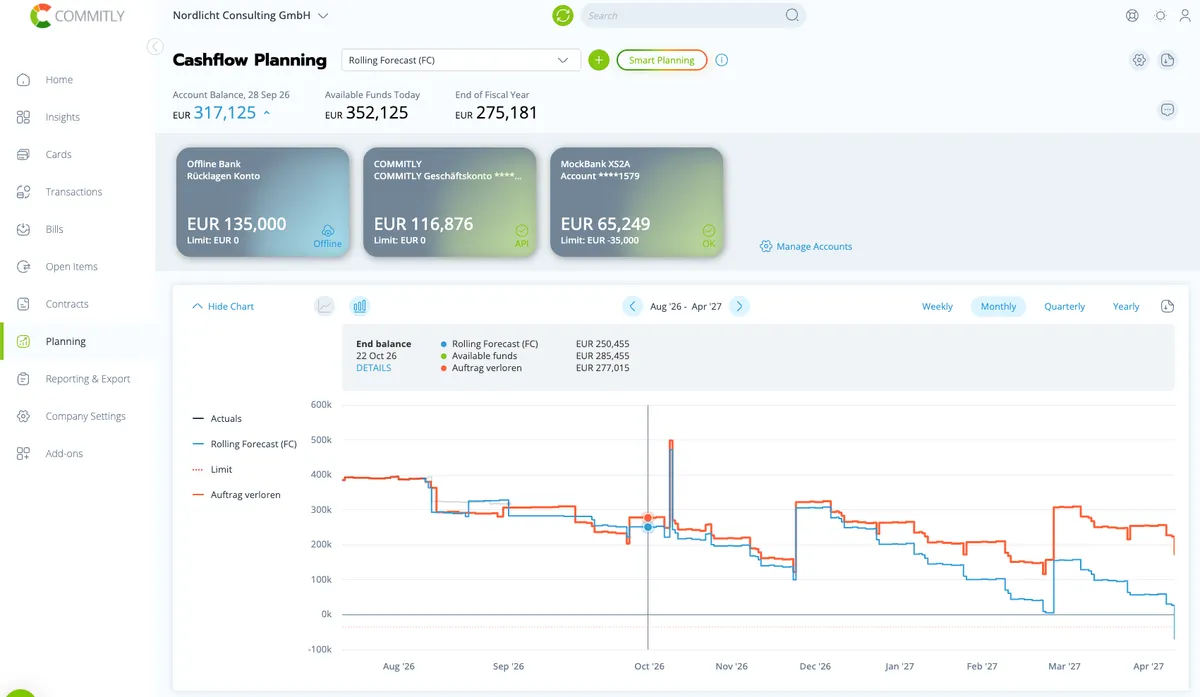
- Use cash flow forecasting tools: digital tools enable more precise analysis and prevent liquidity bottlenecks.
Mini challenge: Draw up a cash flow projection for the next six months taking rental income, fixed costs and unexpected expenses into account. Where could bottlenecks arise and what measures could you take to avoid them?
3. Financing and capital structure: developing long-term financing strategies
A balanced ratio between equity and debt is decisive in real estate investments in order to minimise financing risks. Flexible financing models are also necessary in order to be able to seize growth opportunities.
Case study: An investor relied heavily on debt when acquiring apartment buildings. When interest rates rose, the financing costs exceeded the rental yields achieved, so his liquidity came under pressure. Only by refinancing and adjusting the loan structure was he able to cut his costs and regain financial stability.
Possible mistakes:
- Too high a debt ratio in the real estate investment: rising interest rates can jeopardise financial viability.
- No protection against interest rate rises: short-term loans with variable rates carry high risks.
- The wrong loan terms: long-term investments should not be financed with short-term borrowings.
Optimisation measures:
- Protection against interest rate risks: long-term loans with fixed interest rates provide planning certainty and improve the calculation of the cash flow of the properties.
- Use alternative financing models: mezzanine capital, crowd investing or strategic partners can strengthen the equity base.
- Increase the equity ratio: a solid equity base improves loan conditions and reduces dependence on external financing.
Mini challenge: Analyse your current financing structure: what risks exist if interest rates rise? Which financing alternatives could be cheaper in the long term?
4. Rental management and vacancy risk: maximising income
Vacancies are one of the biggest risks for real estate companies. Effective rental management ensures continuous income, reduces payment defaults and minimises financial losses. Anyone who wants to calculate the cash flow of their properties correctly and optimise it should identify vacancy risks early and counteract them.
Case study: A residential landlord was struggling with high tenant turnover, which regularly resulted in vacancies. Only by introducing long-term tenancy agreements and an optimised tenant selection process was he able to extend the average tenancy considerably and improve cash flow reliability.
Possible mistakes:
- No credit management: tenants with payment difficulties increase the risk of rent defaults.
- No strategy for minimising vacancies: longer vacancy periods reduce cash flow and increase operating costs.
- Insufficient maintenance: poor property upkeep lowers the attractiveness of the property and leads to longer marketing periods.
Optimisation measures:
- Conclude long-term tenancy agreements: contracts with longer terms provide financial planning certainty, above all so that you can calculate the cash flow of the properties and make projections.
- Targeted tenant acquisition: digital platforms and professional marketing strategies help you find qualified tenants faster.
- Use short-term interim letting: furnished lettings or flexible living concepts can bridge vacancy periods and generate additional income.
Mini challenge: Calculate the average tenancy duration of your properties. What measures could you take to extend it and thus reduce vacancy risks?
5. Tax optimisation and cost efficiency: more net from your cash flow
Targeted tax optimisation can considerably increase the net cash flow generated by real estate. Strategic depreciation, tax incentives and consistent cost control expand financial room for manoeuvre and maximise returns.
Case study: An owner of commercial property did not make full use of his depreciation options and therefore paid unnecessarily high taxes. Only after comprehensive advice from a tax expert was he able to use targeted modernisation measures to secure tax advantages and reduce his tax burden.
Possible mistakes:
- Not using depreciation optimally: missing or insufficient depreciation can lead to unnecessarily high tax payments.
- Not applying for tax incentives: funding for refurbishment or energy-related measures often goes unused.
- High operating costs due to a lack of control: unnecessary expenditure reduces cash flow and weighs on the return.
Optimisation measures:
- Make optimal use of depreciation options (AfA): apply straight-line and declining balance depreciation as well as special depreciation deliberately.
- Check tax incentives: use funding programmes for energy-related refurbishment or modernisation to secure tax advantages.
- Optimise operating costs regularly: review maintenance contracts, insurance policies and energy contracts to identify savings potential.
Mini challenge: Analyse your recent tax assessments and check whether you have made optimal use of all depreciation options. Which tax advantages might you have missed so far, with a negative effect on the calculation of your real estate cash flow?
Conclusion: sustainable cash flow management as a success factor
Solid cash flow management helps real estate companies secure financial stability, foster growth and minimise risks. Anyone who avoids the most common mistakes can not only optimise returns but also ensure long-term financial security.
A strategic combination of cash flow planning, financing optimisation, effective rental management and tax efficiency creates lasting competitive advantages. Professional cash flow management for real estate ensures that you meet market changes with confidence and avoid financial bottlenecks.
Tip: Use the mini challenges to improve your liquidity management actively and to be able to calculate the cash flow of your properties in an optimised way!